
Parks and gardens

The Portes de l’Eure shelter outstanding parks and gardens including Claude Monet’s garden in the village of Giverny. They are located in the areas surrounding the châteaux of the Seine and Eure valleys or in the towns and villages of the region, where you can enjoy breathtaking panoramas and green spaces.


Claude Monet Foundation – Giverny

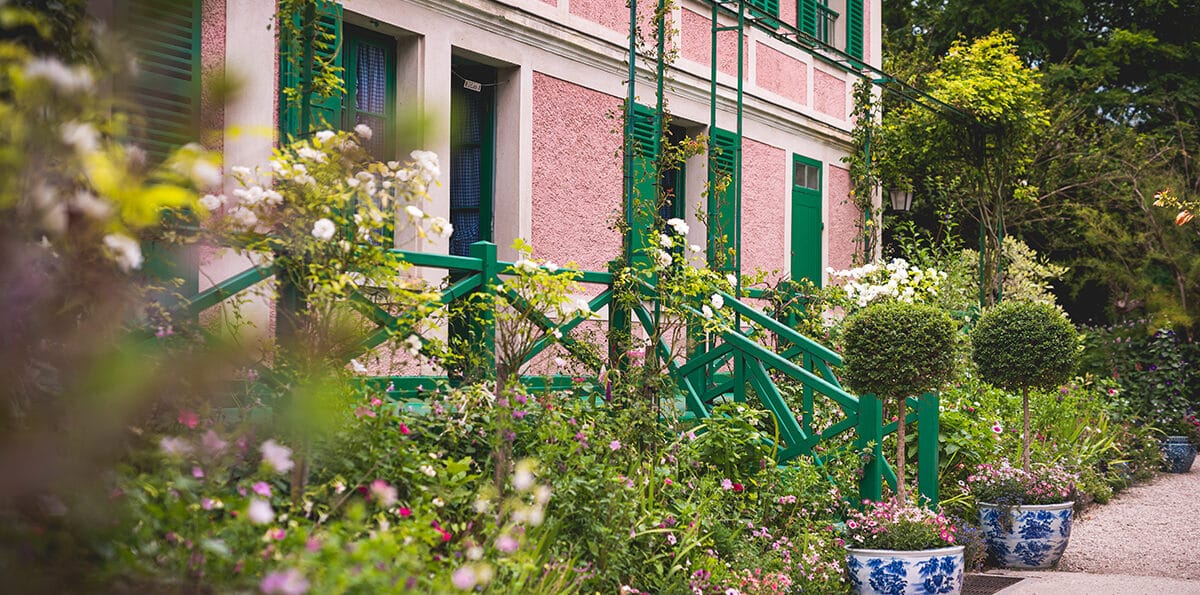
Maison de Claude MonetThe pink roughcast house was lived in by the leader of the impressionist school between 1883 and 1926, and its former colourful interior and intimate charm have been restored.
Several of the living rooms contain, according to the hanging position chosen by the Master of Giverny himself, his precious collection of Japanese prints.
Just a few yards from the house is the vast Nymphéas studio, which has been restored. It houses the Foundation's shop.

Monument HistoriqueThe gardens have been fully restored to their former glory and can now be admired by visitors to this "painting created by nature itself", considered by contemporaries of Claude Monet to be one of his greatest works.

In front of the house and studios, the rectilinear plots and archways of plants in the “clos normand” garden are surrounded by stunning flowerbeds. From spring to summer, the garden reflects the changing palette of a painter gardener who was “in love with flowers”. He discovered Giverny while looking out from the door of the small train between Vernon and Gasny, and moved there with Alice Hoschedé and her children.Buste de 
Claude Monet
They initially lived in an inn, and then rented a house from Louis-Joseph Singeot. It was here that Claude Monet finally settled. The property that covers more than one hectare is situated below at the end of the village, and bordered below by the "chemin du Roy" that runs alongside a small department railway linking Vernon to Gasny, and above by the “rue de l’Amsicourt” – now the rue Claude Monet. The house borders the street and lies opposite a large orchard. There is a simple barn to the left of the house seen when viewed from the garden. The painter immediately made it his salon and studio where he loved to sit and smoke, minutely examining the canvases he has painted outside.

Claude Monet’s garden

Jardin remarquableThe Clos Normand has a one-hectare garden that includes an apple orchard and a vegetable garden whose earth is carpeted in thousands of flowers.
In 1893, Claude Monet brought this land, which was separated from the “clos normand” by the small railway line and the chemin du Roy. This enabled him to create his “water garden”, over which he built the Japanese bridge with its elegant lines in 1895, that is now fully restored. The site is listed as a “Jardin remarquable” (outstanding garden).


Opening times:

1 April to 1 November every day and public holidays from 9.30am to 6pm. Last admissions at 5.30pm. 

You can avoid queuing by buying your admission ticket online by Internet (€7.70):
www.fnac.comwww.ticketnet.com

or from the Portes de l'Eure Tourism Office at the Giverny and Vernon offices (€6.50): Billetterie

Prices:

Adults: €6
Children under 7: free
Children under 12: €3.50
Students: €4.50
Disabled: €3
Gardens alone: €4.50

Contact details:

Phone: +33 (0)2.32.51.28.21 – Fax: 02.32.51.54.18
Email : contact@fondation-monet.com
Website: www.fondation-monet.com


Garden of the Musée des Impressionnismes - Giverny 

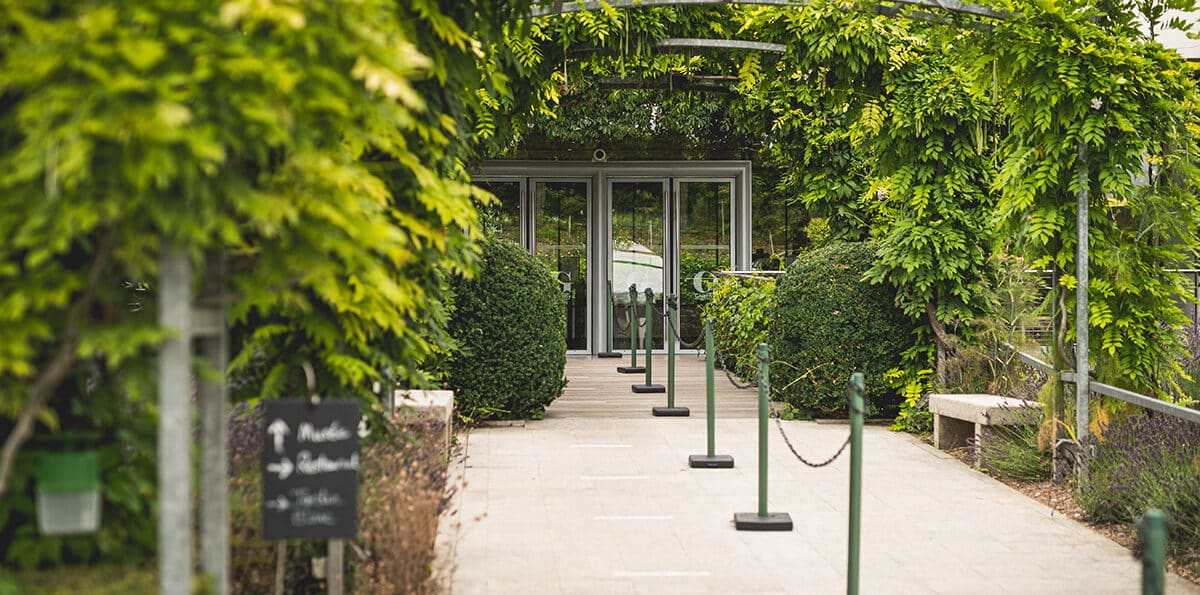
Jardin remarquableVisitors are welcomed by a trellis covered in white wisteria, as a tribute to the main path of Claude Monet’s garden.
This “outstanding garden” created by the landscape artist Mark Rudkin has magnificent thematic flowerbeds directly inspired by the impressionist paintings exhibited in the museum.
It is structured and contemporary, with single-colour square beds in symmetric succession, punctuated by alternating hedges of beech and emerald thujas. The space is divided into “rooms” of warm and cool colours. The west end of the garden gives you a viewpoint overlooking Giverny hill Beds of flowers and wild plants, known as “jardins fous” (wild gardens) make the transition to a poppy meadow. This meadow can be seen from the museum's rooms and pays a radiant tribute to one of the impressionists’ favourite subjects.


Opening times:

Open from 1 May to 31 October every day from 10am to 6pm
Free access to the garden.

Contact details:

Tel.: +33 (0)2 32 51 94 65 - Fax: 02 32 51 94 67
E-mail : contact@mdig.fr
Website: www.mdig.fr


Park of the château de Saint-Just, at Saint-Just 

Château de Saint JustBuilt in the late 16th century, it boasts many outbuildings from this period: dairy, drinking trough, external cellar, vegetable garden, etc. The park is a listed historical monument and features a refined waterway resplendent with basins, $$$clusters of plants, mirrors and water steps threading its way between forested areas and natural terraces with many viewpoints over the Seine Valley.

Jardin 
remarquableThe park was created back in the late 16th century when a famous family decided to rebuild the château and construct the large terrace.
This “outstanding garden” has undergone many phases ranging from a French “formal” garden to an English “informal” garden.


Opening times:

June and July; as part of the "Rendez-vous au jardin" event; heritage days: every day 3pm-6pm - Admission is free.
Sunday: guided tour at 4pm.
New this year:  Opening of the exterior cellar and icehouse to the public.

Prices:

€4 per adult – Free for under 18s

Contact details:

Tel.: +33 (0)2 32 52 21 52 -  +33 (0)1 47 27 73 60


Retour haut